Marine Protected Areas (MPAs) are increasingly important in the fight for ocean conservation, but a new study has shown that to be most effective for sharks and rays, they need to be combined with a total ban on the take of vulnerable species.
Published in Nature, Ecology and Evolution, the study represents the combined work of more than 100 scientists from across the globe, utilising data from Global FinPrint, the world’s largest reef shark and ray survey. Funded by the Paul G Allen Foundation, Global FinPrint used baited remote underwater video systems (BRUVS) to undertake a global assessment of coral reef sharks and rays.
https://www.nature.com/articles/s41559-024-02386-9
The scientists used data taken from 66 fully protected areas across 36 countries, each of which is situated within a range of different fisheries management regimes. The team compared population data between areas that had no protections, MPAs where limited take was allowed, and MPAs where there was an outright ban on the fishing of sharks and rays.
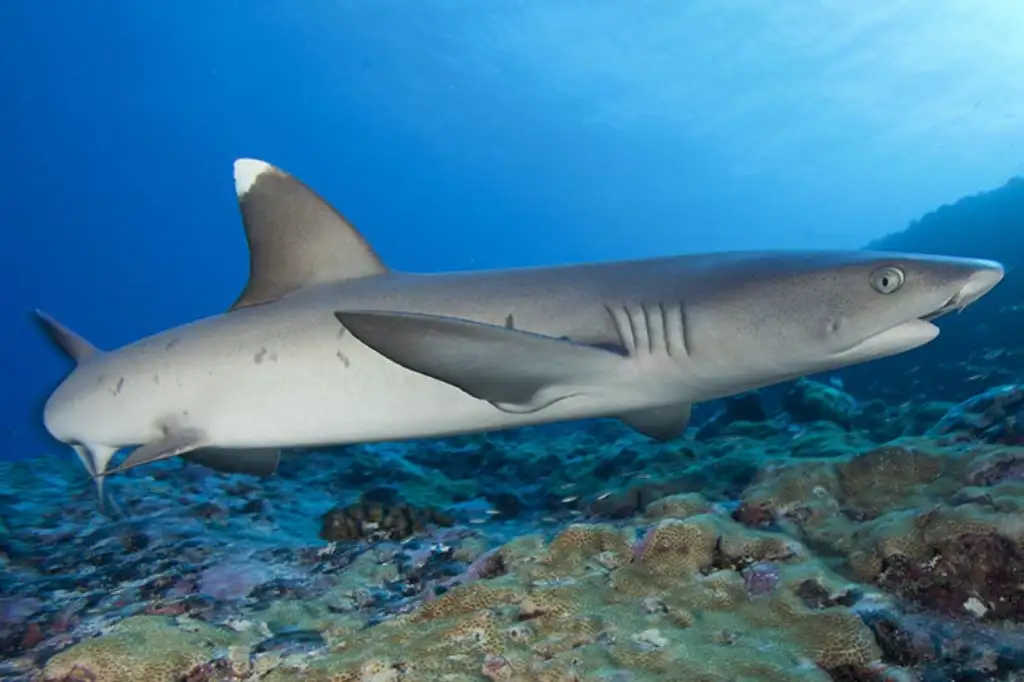
The team found that the overall benefits were greatest for reef sharks, which were found to be ‘twice as abundant in fully protected areas compared with areas open to fishing’. The benefits were found to be greatest in areas which have been most heavily affected by human activity, although the study also notes that they did not extend to rays or ‘wide-ranging’ sharks.
‘Previous studies have shown that fully protected areas — that is MPAs where all fishing is prohibited — can benefit reef sharks,’ said Dr Jordan Goetze, lead author of the study. ‘Nations can boost these benefits even further … by applying restrictions on destructive fishing gear such as longlines and gillnets or limiting shark catches outside the protected areas. These actions reduce shark mortality across the whole nation and supercharge the effect of fully protected areas.’
The news represents a positive step in shark and ray conservation. It is estimated from the Global FinPrint data that reef sharks are virtually extinct across 20 per cent of the reefs surveyed as part of the BRUVS project, with an average global decline of 63 per cent in populations of whitetip, grey, and blacktip reef sharks; Caribbean reef sharks and nurse sharks.
Total shark and ray fishing bans have already proven to be effective. As reported in the Spring 24 issue of DIVE, grey reef shark populations in the Maldives have rebounded dramatically over the last decade, and long-term protections in The Bahamas have seen shark populations remain relatively settled.
‘Many nations are currently in the process of expanding their protected areas as part of the global 30×30 initiative, which aims to protect 30 per cent of our oceans by 2030,’ said Dr Demian Chapman, Lead Scientist at Global FinPrint. ‘This study provides guidance on how nations can expand their protected areas in a way that benefits these ecologically, culturally, and economically important reef sharks.’
https://divemagazine.com/scuba-diving-news/shark-fishing-bans-double-reef-shark-numbers-study
Directed conservation of the world’s reef sharks and rays
- Jordan S. Goetze,
- Michael R. Heithaus,
- M. Aaron MacNeil,
- Euan Harvey,
- Colin A. Simpfendorfer,
- Michelle R. Heupel,
- Mark Meekan,
- Shaun Wilson,
- Mark E. Bond,
- Conrad W. Speed,
- Leanne M. Currey-Randall,
- Rebecca Fisher,
- C. Samantha Sherman,
- Jeremy J. Kiszka,
- Matthew J. Rees,
- Vinay Udyawer,
- Kathryn I. Flowers,
- Gina M. Clementi,
- Jacob Asher,
- Océane Beaufort,
- Anthony T. F. Bernard,
- Michael L. Berumen,
- Stacy L. Bierwagen,
- Tracey Boslogo,
- …
- Demian D. Chapman
Abstract
Many shark populations are in decline around the world, with severe ecological and economic consequences. Fisheries management and marine protected areas (MPAs) have both been heralded as solutions. However, the effectiveness of MPAs alone is questionable, particularly for globally threatened sharks and rays (‘elasmobranchs’), with little known about how fisheries management and MPAs interact to conserve these species. Here we use a dedicated global survey of coral reef elasmobranchs to assess 66 fully protected areas embedded within a range of fisheries management regimes across 36 countries. We show that conservation benefits were primarily for reef-associated sharks, which were twice as abundant in fully protected areas compared with areas open to fishing. Conservation benefits were greatest in large protected areas that incorporate distinct reefs. However, the same benefits were not evident for rays or wide-ranging sharks that are both economically and ecologically important while also threatened with extinction. We show that conservation benefits from fully protected areas are close to doubled when embedded within areas of effective fisheries management, highlighting the importance of a mixed management approach of both effective fisheries management and well-designed fully protected areas to conserve tropical elasmobranch assemblages globally.










Leave a Reply